Identify Unsafe Gear
Inspect for visible wear, cracks, cuts, deformation, corrosion, damage and missing identification.
Professional inspections of chain slings, wire rope slings, webbing slings, shackles, hooks, lifting beams and rigging accessories. Identify unsafe equipment, maintain traceable inspection records and plan your next inspection with confidence.
Damaged or untraceable lifting tackle can expose people, plant and production to unnecessary risk. AC Crane Maintenance helps industrial clients identify defects, maintain inspection documentation and act on unsafe equipment before it is used in another lift.
Inspect for visible wear, cracks, cuts, deformation, corrosion, damage and missing identification.
Record the equipment inspected, its identification, findings and the action required.
Coordinate regular LTI inspections across workshops, factories, mines and industrial facilities.
Slings are exposed to sharp edges, chains to wear and overload, hooks to deformation, and shackles to incorrect loading. Identification tags can become damaged or unreadable. An inspection provides a structured way to assess equipment condition and decide which items may remain in service.
When equipment fails an inspection, it must be clearly identified and taken out of use pending the appropriate corrective action. Our reports help site teams understand the findings and plan replacements.
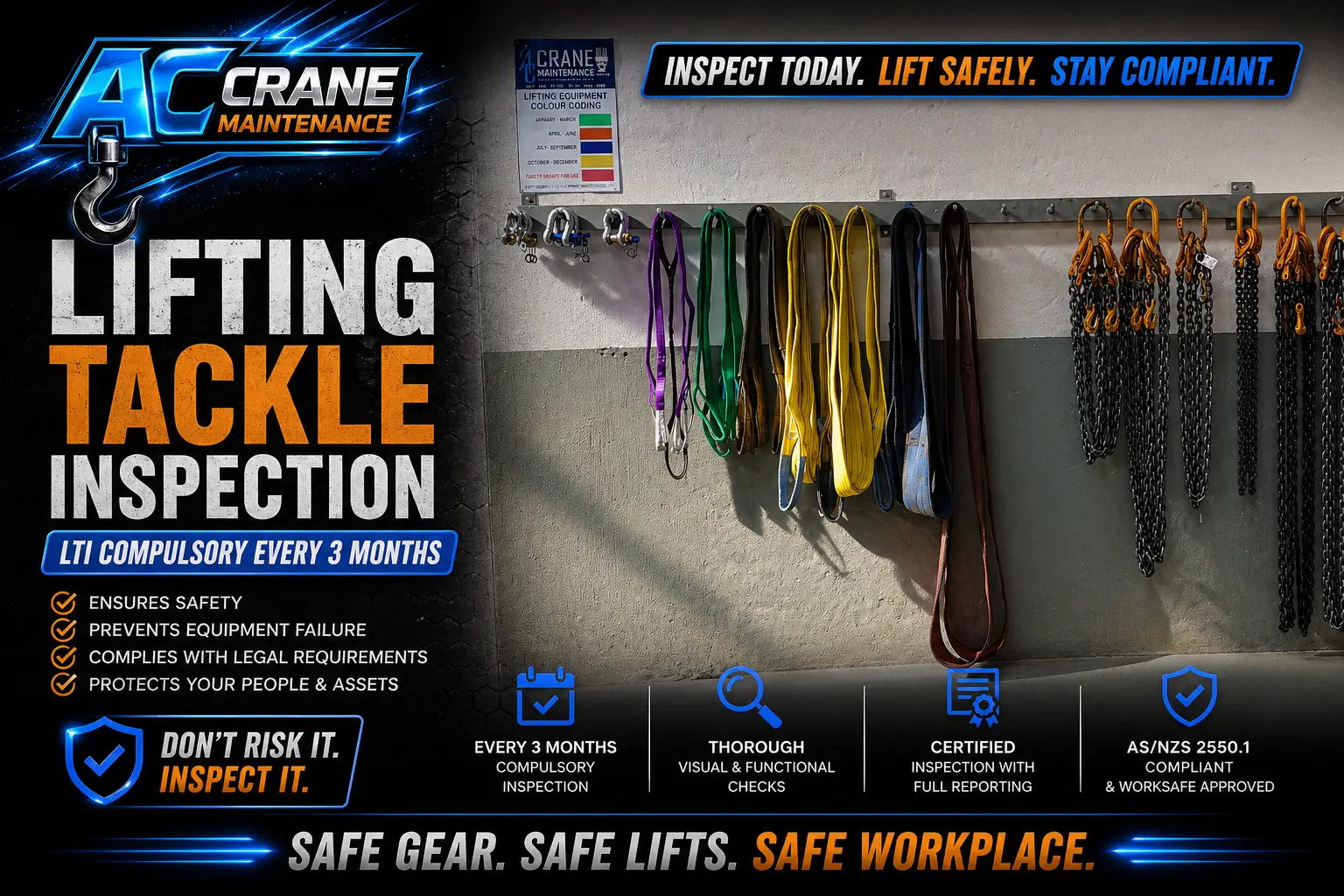
Our inspection scope covers loose lifting tackle and associated rigging accessories. Powered lifting machines and fall-protection equipment can require different inspection regimes and competent specialists.
Need chain blocks, lever hoists or fall-arrest equipment checked? Tell us what equipment is on site. We can confirm the appropriate inspection scope and requirements rather than treating every item as loose lifting tackle.
Stretched, twisted, worn or cracked chain links, corrosion and signs of overload.
Deformed hooks, excessive throat opening, worn pins, damaged threads and missing safety latches where required.
Unreadable tags, absent working load limit information or missing traceability.
Cut webbing, failed stitching, heat or chemical damage, broken wire strands and damaged eyes.
Welding, grinding, bending or modifications not permitted by the applicable manufacturer or standard.
Permanent deformation, incorrect loading configurations and equipment used outside its intended application.
A structured approach from identifying the equipment through to reporting and scheduling the next inspection.
Check the equipment type, identification and working load limit markings where applicable.
Examine the item against relevant inspection and rejection criteria.
Document the item, observed condition and inspection result.
Clearly identify rejected equipment so it is not returned to service.
Provide the inspection record and recommendations for replacement or further action.
Help the client plan the next applicable inspection date.
Lifting tackle must be selected, used, inspected and maintained in accordance with the Occupational Health and Safety Act, the applicable Driven Machinery Regulations and relevant equipment standards.
DMR18 provides for periodic inspection of lifting tackle by a competent person at intervals not exceeding three months. More frequent checks may be necessary for severe service conditions.
Equipment identification, rated capacity markings and traceability help operators select the correct gear and support inspection records.
Inspections should be performed by a competent person familiar with the equipment and relevant rejection criteria, with findings documented.
Minimum design factors depend on the type of sling, rope, chain or lifting accessory and the standard governing that product. A single factor should not be applied to all lifting equipment.
Relevant SANS or adopted ISO standards can cover wire ropes, lifting chains, shackles, slings and inspection/discard criteria. The applicable edition and product category must be checked.
Damaged, unidentifiable or otherwise unsafe lifting tackle must not be used until appropriately assessed and corrected, or replaced.
Important distinction: Quarterly inspections of loose lifting tackle are not the same service as periodic inspections or load testing of lifting machines. Requirements also differ for powered hoists and personal fall-protection equipment. We can help you identify the right inspection or testing service for each asset.
We assist manufacturing facilities, engineering workshops, steel plants, warehouses, logistics operations, mines, construction sites, rigging teams and industrial maintenance departments.
Johannesburg, Pretoria, Benoni, Boksburg, Brakpan, Springs, Germiston, Wadeville, Alberton, Kempton Park, Jet Park, Midrand, Centurion and surrounding industrial areas. Nationwide projects can be discussed according to site requirements.
Practical understanding of lifting operations, cranes, hoists, rigging equipment and industrial working environments.
Inspection support with access to replacement slings, shackles, hooks and related lifting accessories.
Related crane servicing, lifting machine inspections and load testing can be discussed as part of a wider maintenance plan.
Under the applicable DMR18 provisions, lifting tackle is subject to inspection by a competent person at intervals not exceeding three months. Equipment should also be checked before use, and site conditions may require additional inspections.
Unsafe equipment should be identified and removed from service. Depending on the item and the relevant standard, it may require approved corrective action, further assessment or replacement before it can be used again.
We can discuss these items when planning your inspection. Chain blocks and lever hoists are lifting machines and can have inspection and testing requirements that differ from those for loose lifting tackle.
Our LTI service includes recording inspection findings and assisting clients with equipment registers and traceable documentation.
Yes. We can assist with enquiries for slings, shackles, hooks, lifting beams, chain blocks and other lifting equipment, subject to the required specifications and availability.
Send us your site location, approximate number and types of items, current lifting tackle register if available, preferred inspection date and any site access or induction requirements.
Need quarterly LTI inspections, updated lifting tackle registers or replacement rigging equipment? Send us your site details and equipment list, and our team can assist with a quotation.
